Blog Post 18 - The Not-So-Glamorous Side of Restoring a Classic Car Abroad
Dream projects aren’t glamorous every day - but that’s what makes them worth it.
I thought restoring a classic Beetle in Peru would be romantic and fun. Turns out, it’s also paperwork, wrong parts, and a lot of Google Translate.
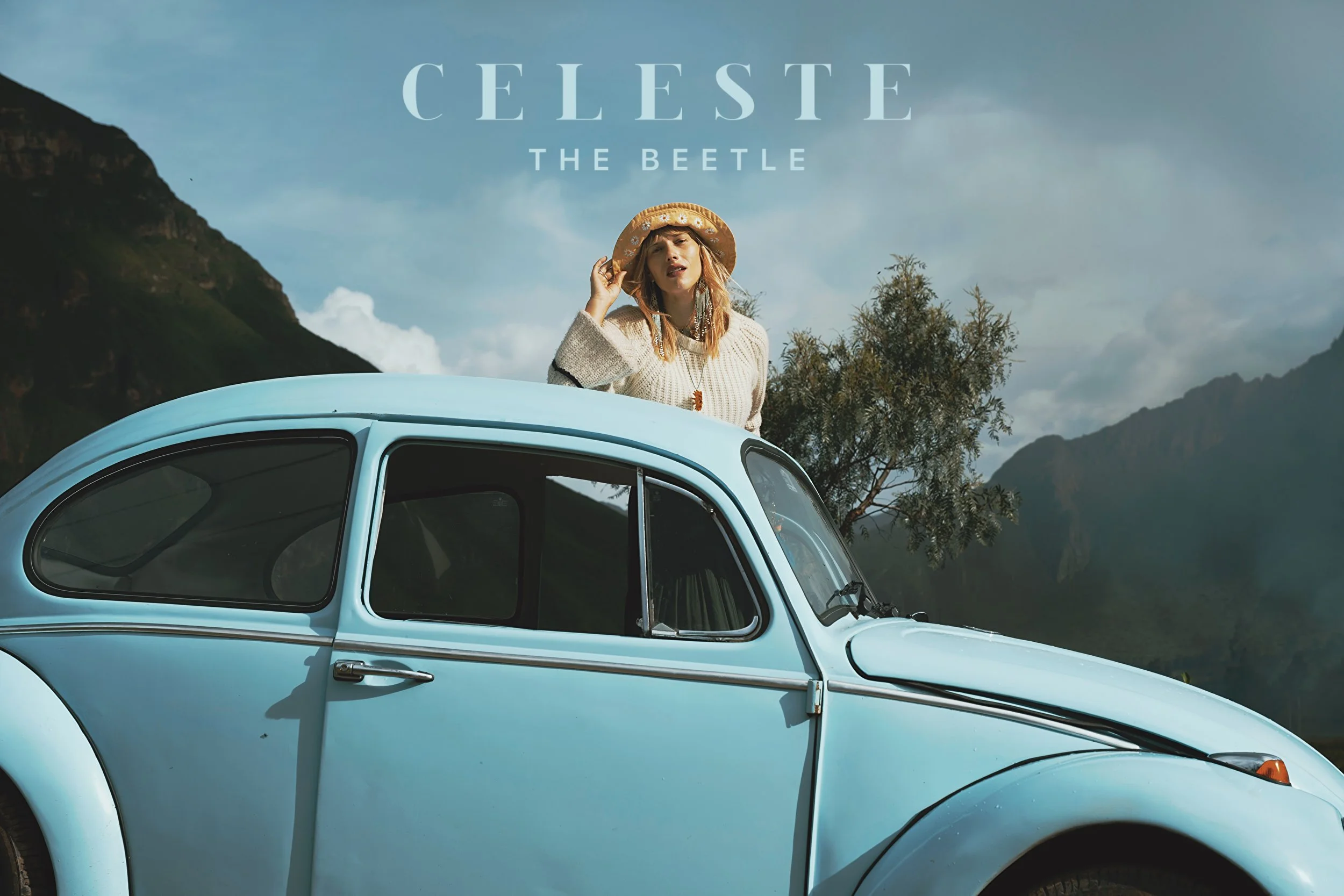
Special thanks to my brother Desheay for taking this photo.
Dreaming in Spanish: Restoring a Classic Beetle in Peru
It all started with imagining scenic drives, cute photos, and spontaneous road trips through the Andean countryside - windows down, Fleetwood Mac and the Dire Straights through my speaker.
And to be fair: those days will come!
What I didn’t fully picture at the start was the bureaucracy, the wrong car parts being delivered, the language barriers, and the patience this project would demand from me.
Restoring a car in a foreign country is not just a mechanical project. It’s a cultural one too.
The Reality Behind the Dream
Some days I feel like I’m making progress. Other days I feel like it’s not moving forward at all!
On paper, everything sounds simple. In reality, trying to do everything according to the rules has been surprisingly hard.
Peruvian bureaucracy has turned into an adventure of its own.
For example: to get the roadworthy check done, they asked me to present a document I had - however which apparently was incomplete. It needed to contain specific technical details - the length and height of the car, the number of seats, and more. Those numbers weren’t on the original paperwork, so I had to do a separate (and costly) technical test to measure everything and receive a certificate. With this certificate I then needed to go to another office to update the original document - which takes about 15 days to process and, of course, comes with another cost.
So yes, I technically have all the information now. But because of bureaucracy, I’m forced to wait to get the roadworthy certificate.
Honestly, that’s probably why many Peruvians don’t even bother having all these documents in place.
I just want to do everything correctly - as Dutch as I am. I don’t want issues - especially since, to many people here, I appear to be “very rich” simply because I’m blonde and light-eyed.
Add doing all of this in higher-level Spanish (a language I’ve only been learning for about a year and a half), and suddenly even simple tasks require full concentration. After a full day of this, my brain completely blocks - no more Spanish, just mental exhaustion.
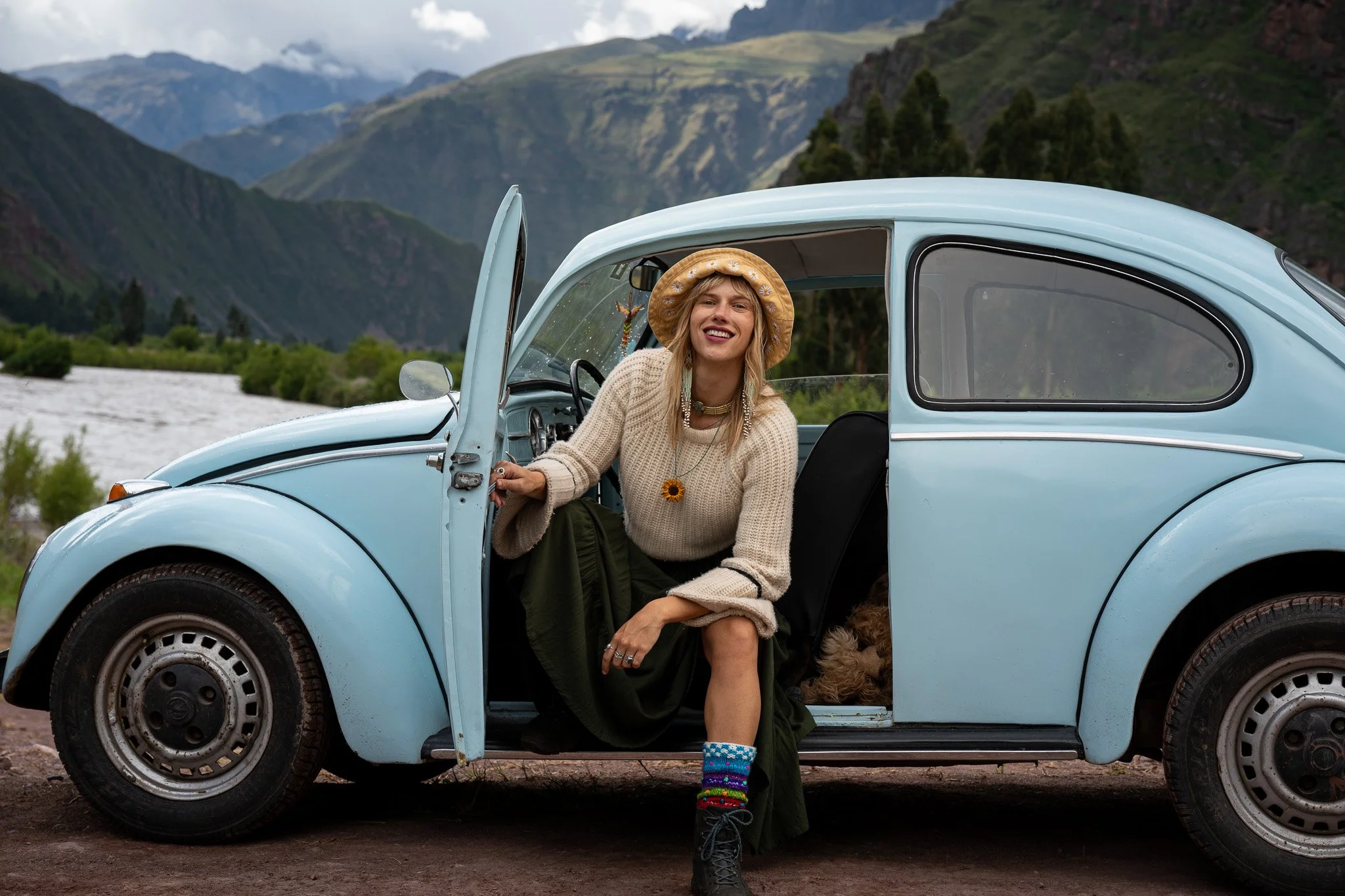
Celeste - my German ‘67 Volkswagen Beetle
She still needs a lot of love - she’s quite a project. But step-by-step I am bringing her back into the classic state she originally came in! This color sky blue is her original color. I have already installed windows and sidesteps and the engine has been rebuilt.
The Practical Challenges
I’ve been trying to find specific car parts and shops that tell me they have it but then send me the wrong one.
Because I don’t have a Peruvian bank account, I’ve had to ask friends for help ordering. There have definitely been moments where I thought: it would have been so much easier if I’d have just bought a car that was already fully restored.
And then… there was the drive home from Cusco.
Let’s just say it was challenging!
The Unexpected Lessons
Every step along this journey is teaching me something.
It’s teaching me to be more resilient. It’s teaching me to think in solutions rather than problems. To focus on what I can do, and let go of what I can’t control.
It’s teaching me how to ask for help - and how to accept it.
My Spanish improves with everything I do related to my car.
My patience is growing.
My problem-solving skills are levelling up.
I’m learning how things work here - not how I expect them to work based on life in the Netherlands or Australia.
That said, compared to South Africa, this has actually been easier. Bureaucracy there was far more stressful as a foreigner. In Peru, the people behind the desks are genuinely kind and often go out of their way to help. (In South Africa it took me five months to get my car registered in my name - but that’s a story for another time.)
There are so many kind people along the way here in Peru. Friends who help me get fair prices, explain processes, and protect me from the infamous “tourist tax” - because yes, overcharging foreigners is very real.
This project is stretching me in ways I didn’t originally plan for - but maybe that’s exactly why it matters.
Why I don’t Regret It
No - I didn’t take the easy route.
But I’m learning something new every single day. And I see so much potential!
Yes, I’m currently investing a large part of my income into this project. But I can already imagine the road trips once she’s in a more reliable state. Using her for creative photoshoots. Combining travel, art, and storytelling. Building memories instead of just owning a car to get from A to B.
She is an adventure.
This Beetle isn’t just transportation.
She’s part of a bigger dream - and part of my business ideas.
A dream of creative freedom, slow travel (she really doesn’t go that fast), living fully in the here and now, and building a life filled with stories.
She’s becoming part of my story here - weaved in - just like Vino & Van Gogh was part of my story in Australia.
I am so excited! I’ve already had businesses and musicians express interest in my car for future advertising projects and even music videos.
So no - it’s not glamorous every day. But that’s exactly what makes it worth it. Living in a rooftop tent for 3,5 years wasn’t all that glamorous either.
What’s Still on the Road Ahead
Even though she already feels like my car, she’s not finished yet. Not even close.
There’s a whole list - a very real one - of things that need to be done before I can call her fully complete and road-trip ready.
Safety comes first. I still need to find and install proper seatbelts. One of the door pins also needs to be removed and replaced with a version that allows me to attach my side mirror - a small detail, but and essential one.
Inside, there’s work waiting too. The fabric still needs to be glued onto the floors. The windows need attention: one stubborn bolt refuses to come loose, so I’ll need a welder to weld something onto it in order to undo it properly. Only then can I remove the small windows and finally install the chrome window frame and new rubbers.
And as if on cue, the newly installed second-hand windows have recently decided they no longer want to wind all the way up - so that’s now part of the puzzle as well.
Once the windows are working as they should, I can install the interior door panels, door handles and window handles. I also still need to install rubber seals on the doors and check whether any of the other rubbers need replacing.
There are smaller but equally important details too. A new key cylinder - as I broke my key inside… The fuel gauge needs replacing so I can actually see how much gasoline I have left. The 1970’s radio is already there, but it still needs a speaker to come back to life.
Then there’s the glovebox that now is a big hole and functions as sort of an alternative airconditioning. I still need to find the missing parts and repaint the glovebox door, which is currently the only part of the glovebox I actually have in my possession.
Mechanically, I also need to go back to the mechanic who helped reconstruct the engine to check a few issues I’ve been having - which, to be fair, are quite normal after an engine rebuild. It’s all part of the process.
And finally, the aesthetic dream: new rims, the classic whitewall bands, and the original rim covers these Beetles rolled out of the factory with back in 1967.
Why This List Doesn’t Scare Me
It actually does, seeing it all written down. A bit overwhelming, but not undoable.
It’s a list representing progress waiting to happen. Testing my patience. And I will make it happen - she’s going to to be a star!
With warmth,
Kimberly 🌻